
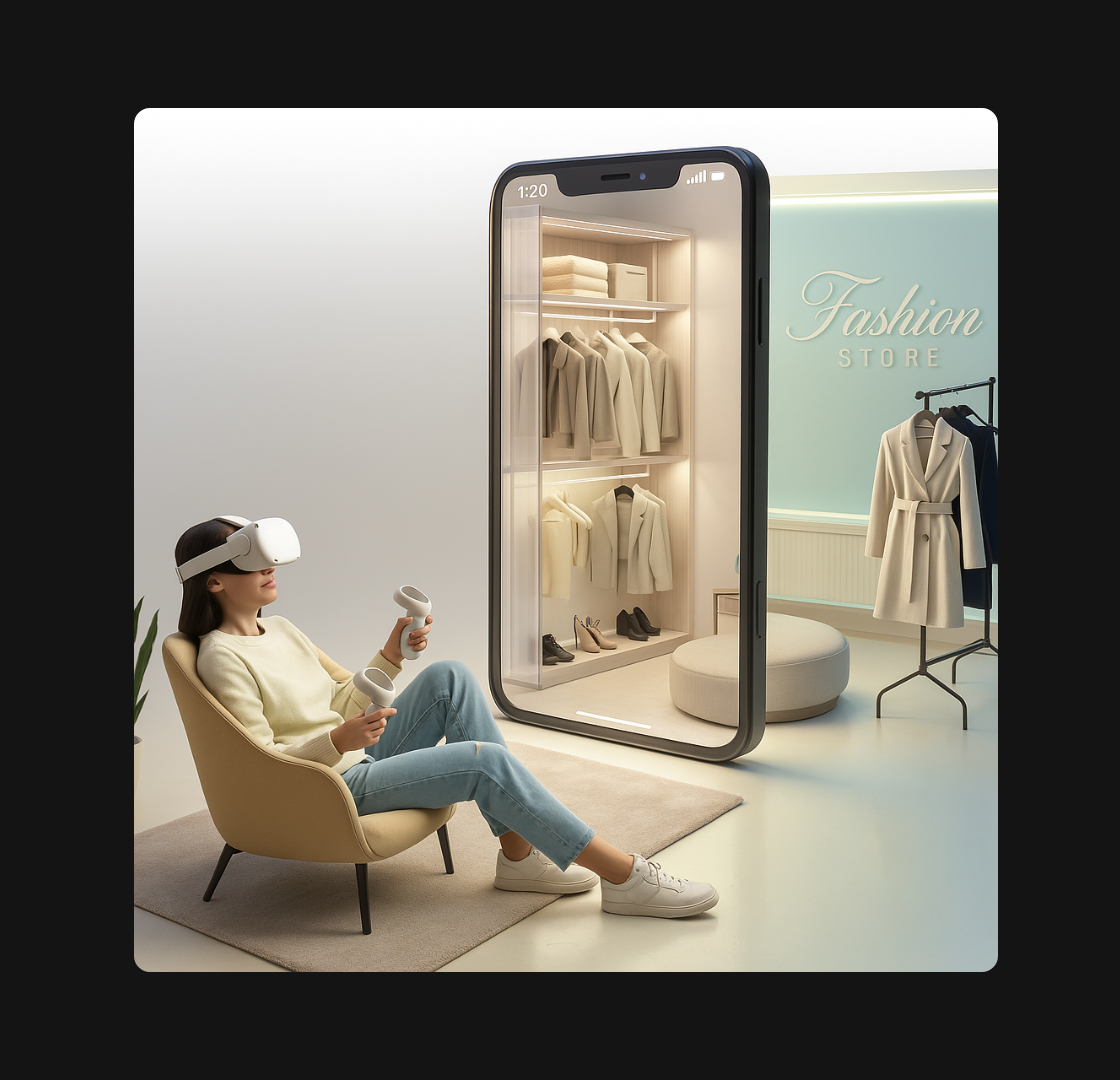
To explore the integration of e-commerce in a VR environment along with studying an user shopping experience.
Context
to replicate a real-world shopping environment in a virtual space, making it as engaging and intuitive as possible for users. Details
Time Frame:
2.5 week
Role:
UX Designer and VR Developer
Tools:
Figma, Unity, Oculus Rift, C#
Responsibilities:
User Experience Design, Interface Prototyping, Research and Analysis, Unity Development, VR Interaction Design, System Testing and Debugging, User Behavior Observation, Technical Problem Solving, Project Management, Feedback Integration
Objective
- Understand
the UX principles specific to VR,focusing on designing user-friendly interfaces. - Study user interactions within a VR shopping platform,
identifying key user behaviors and preferences that influence shopping decisions. - Investigate the
technical challenges and solutionsinvolved in creating an immersive and functional e-commerce VR environment.
Challenge
Designing a user-friendly VR interface that could seamlessly integrate typical e-commerce functionalities with the immersive capabilities of virtual reality presented the primary challenge.
Goal
To set up the shopping experience for an item in a VR environment.
Design Phase
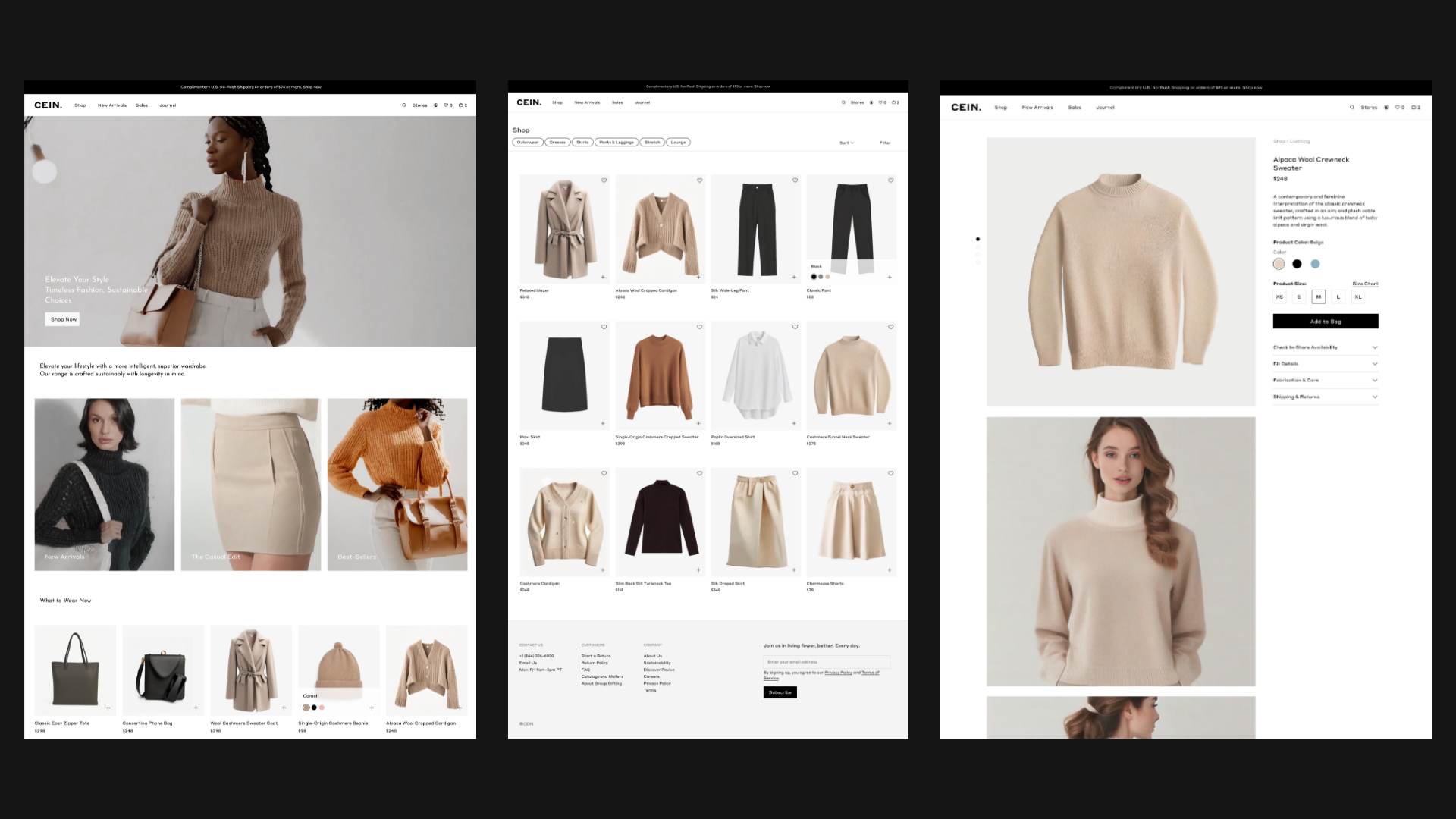
Objective is to design key pages including a welcoming Landing Page, a Product Listing Page to browse items, a detailed Product Details Page for product information, and a Cart Page to review and finalize purchases.
Each page was designed to ensure a seamless shopping flow from start to add in cart.
Development Phase
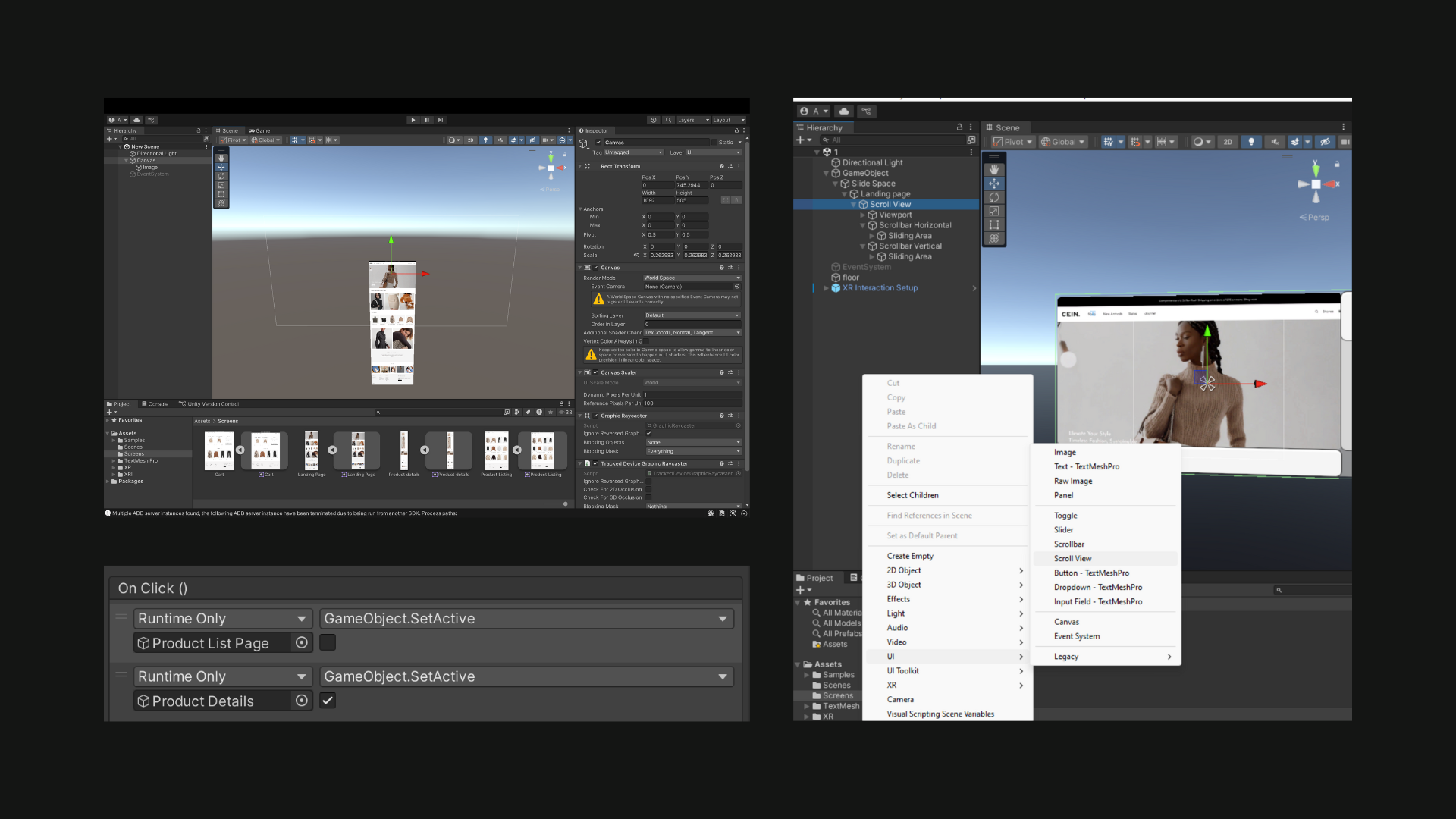
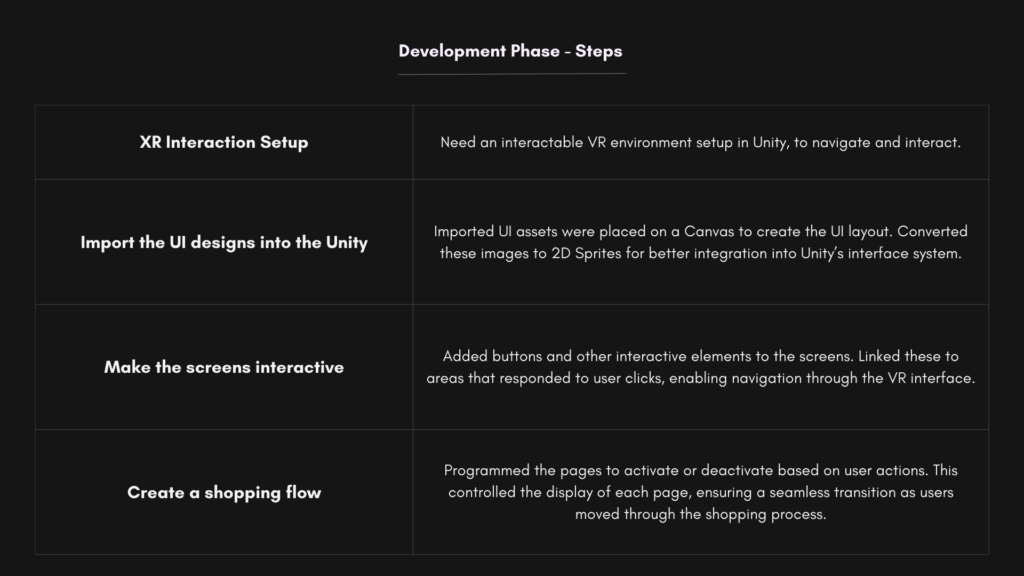
Objective is to build a functional VR interface for the designed pages. Imported the UI designs into Unity, made the pages interactive to enable user clicks, and created a straightforward shopping flow allowing users to select and purchase an item effortlessly.
Testing Phase
Objective was to test the entire flow and to identify any irregularities or breakpoints, aiming for smooth screen transitions upon button clicks.
Problem encountered
I made the button invisible to display the original menu item, and while the button worked on click, there was no hover feedback to indicate button was being highlighted.
This helped me identify a UX issue: the need for clear feedback to show when an action is being performed or is about to be taken.
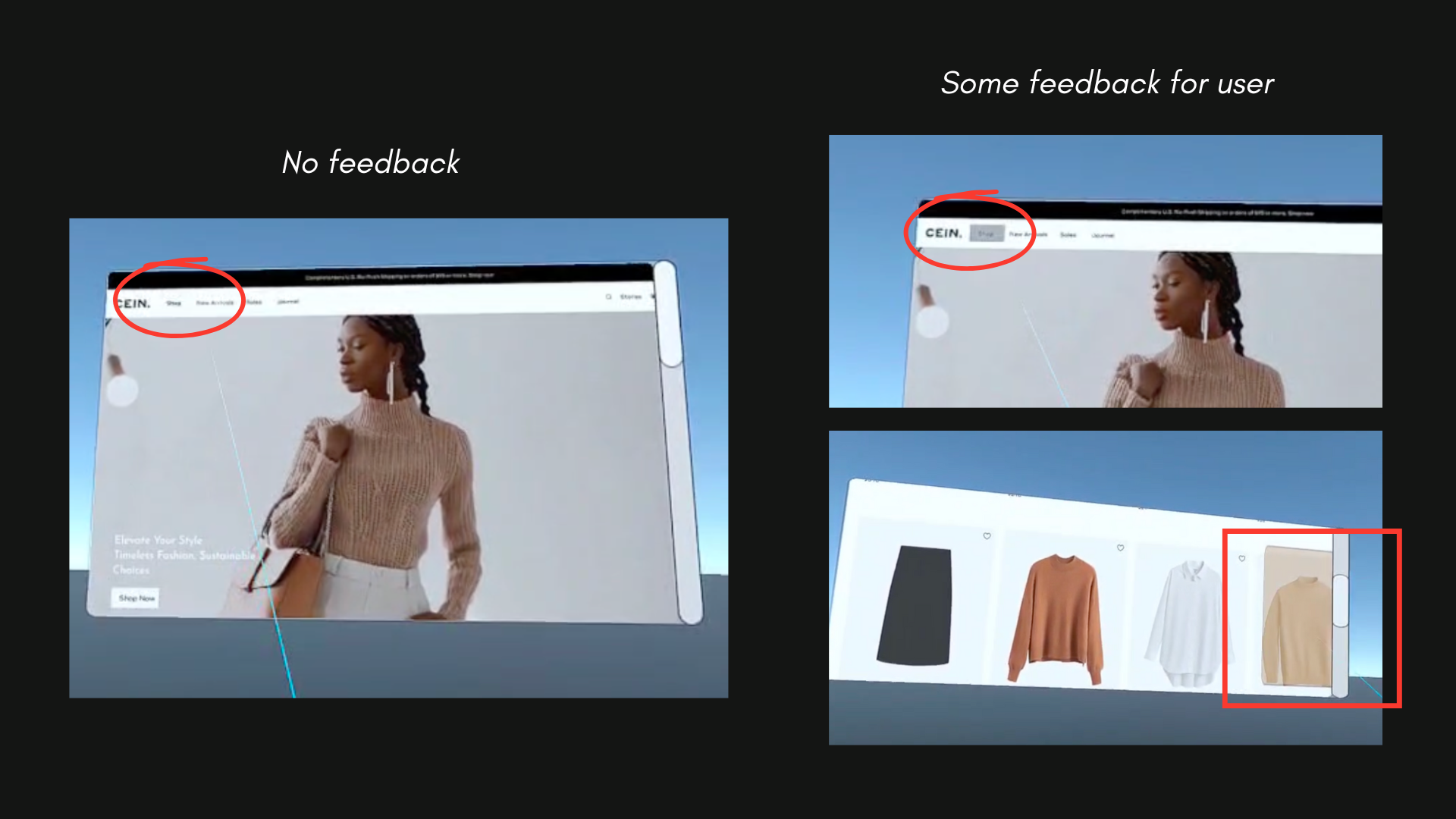
Solved!
I updated the button to display a hover color, providing clear feedback to indicate when it was being highlighted, solving the UX issue of missing visual feedback during interaction.
Reflection and learnings
Design
Learned how to design and develop a basic e-commerce flow in virtual reality.
Interaction
Understood the importance of user feedback and interaction in virtual reality design.
Development
Gained experience with Unity for creating interactive and scrollable UI.
Improvement
Identified areas for improvement to enhance the virtual reality shopping experience.
Personal Key Takeaway
The CEIN VR Store project not only broadened my technical proficiency in VR and e-commerce development but also deepened insights into integrating user-centric design with emerging technologies. This initiative has set the groundwork for future innovations in VR-based shopping experiences.